
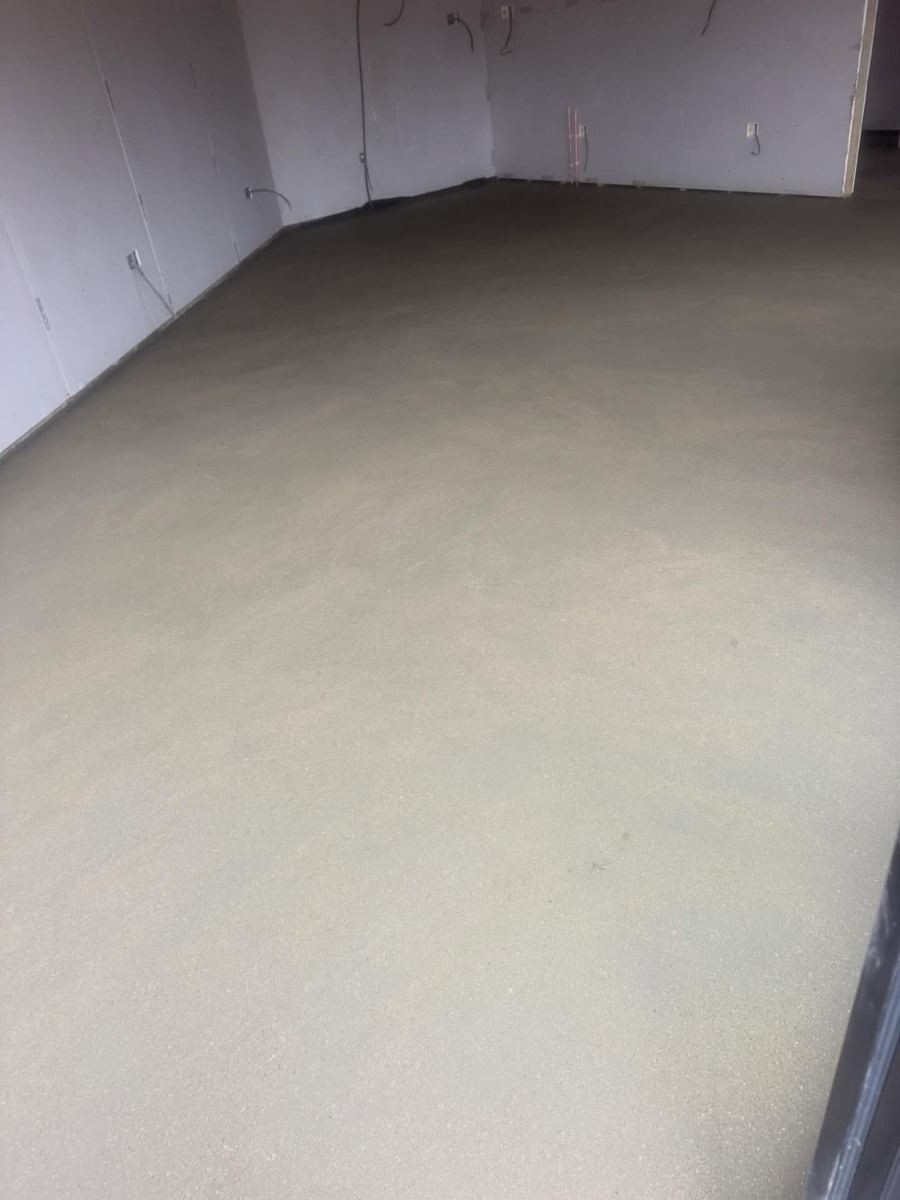
Bathrooms and Wet Rooms
Laid to falls so water drains away properly.
Hard-wearing, versatile and laid by hand to a level finish. We install standard, fibre-reinforced and fast-drying sand and cement screeds for homes and commercial floors across London and the South East.
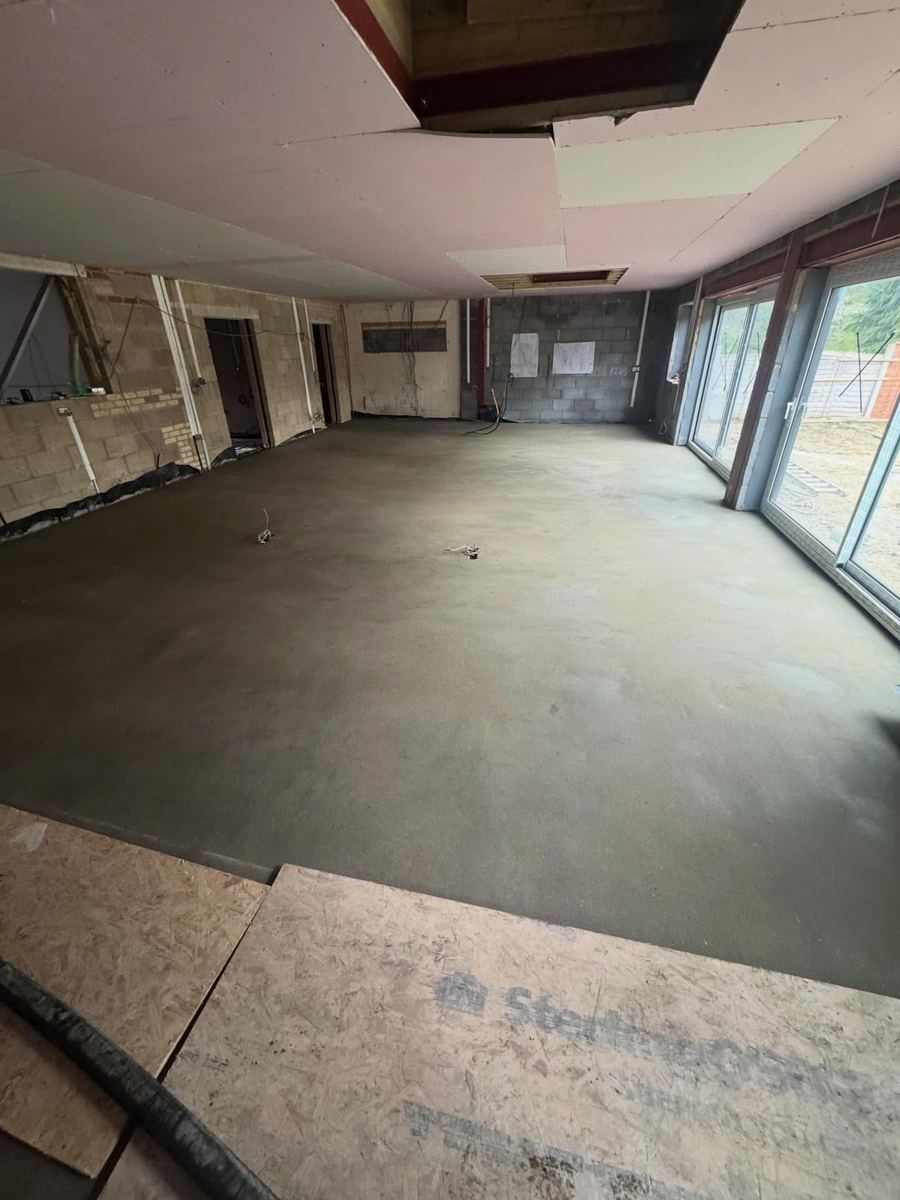
Sand and cement screed is the traditional way to create a flat, level floor. It’s a semi-dry mix of sharp sand and cement, usually around 1 part cement to 3–5 parts sand, spread over the base and compacted and levelled by hand.
It’s been the standard for decades because it’s strong, adaptable and suits almost any floor. It can be bonded to a concrete slab, laid on a membrane, or floated over insulation, and it can be laid to falls in wet rooms and bathrooms, which liquid screed can’t.
We also lay fibre-reinforced screed, which adds strength and reduces cracking, and fast-drying screed for when your flooring needs to go down in days rather than weeks.
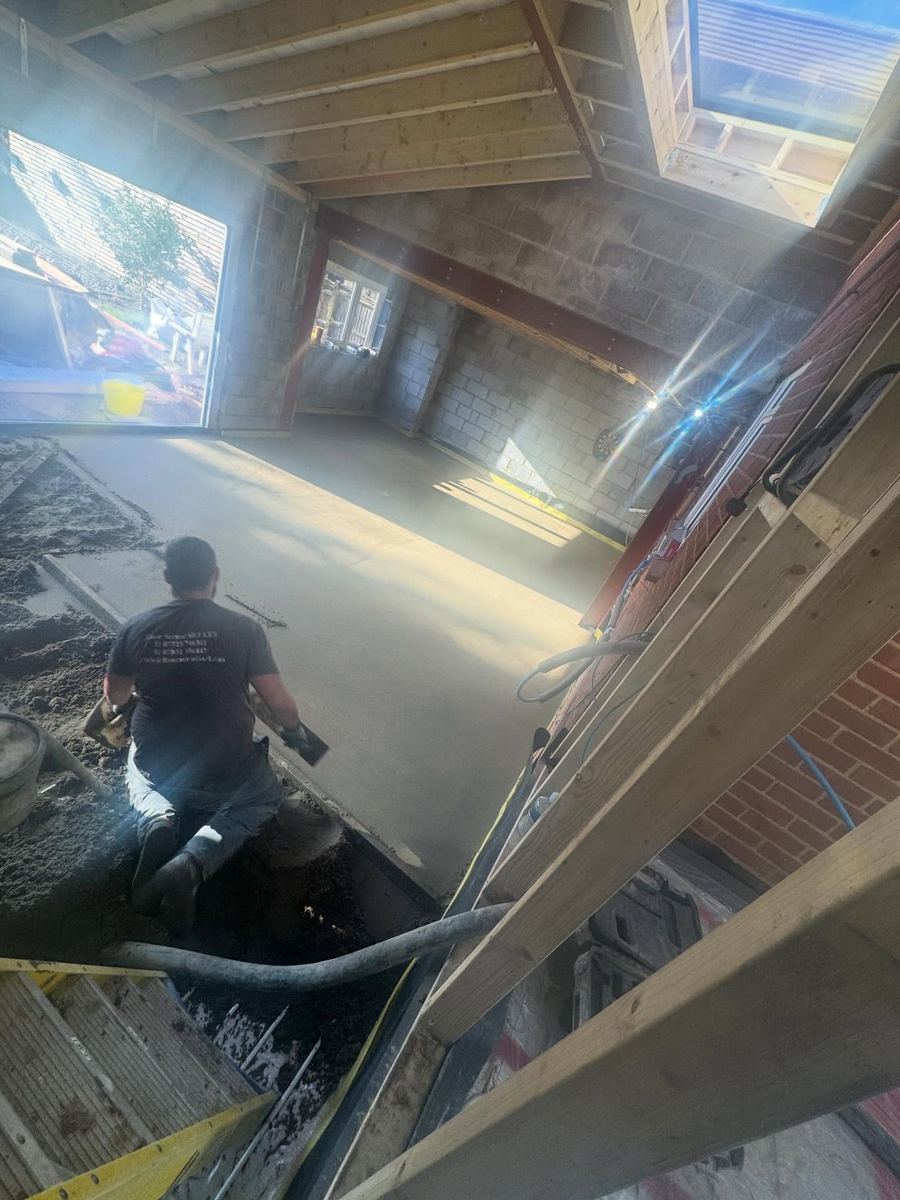
A dense, strong surface that stands up to heavy use.
Can be shaped to fall towards drains in wet rooms, showers and balconies.
Bonded, unbonded or floating, over concrete, membranes or insulation.
No pump needed, so it’s practical for single rooms, tricky access and patch repairs.
Additives and rapid-drying screeds can cut drying time from weeks to days.
Polypropylene fibres add strength and help reduce shrinkage cracking.
The build-ups we work to. We confirm the right depth for your floor at survey.
Laid to falls so water drains away properly.
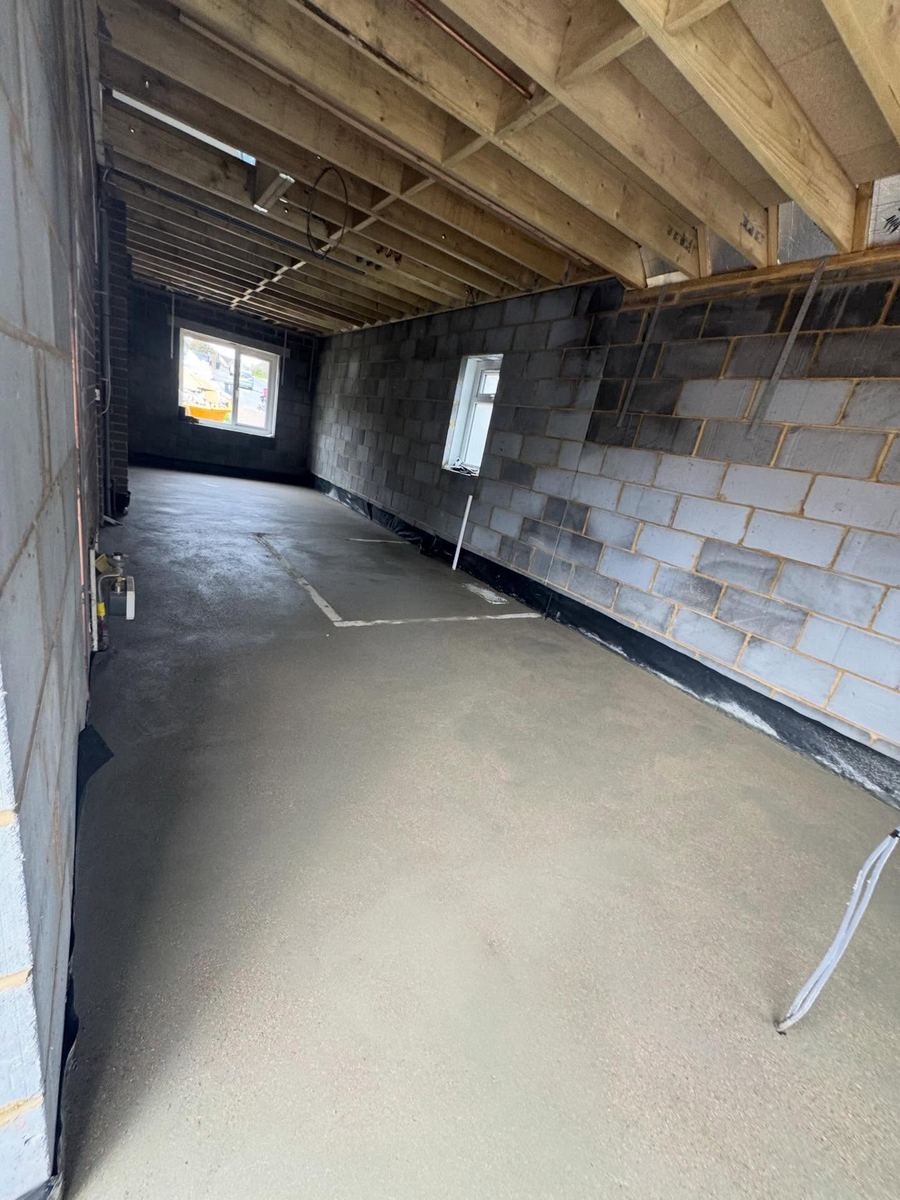
Matching new floors to existing levels, room by room.
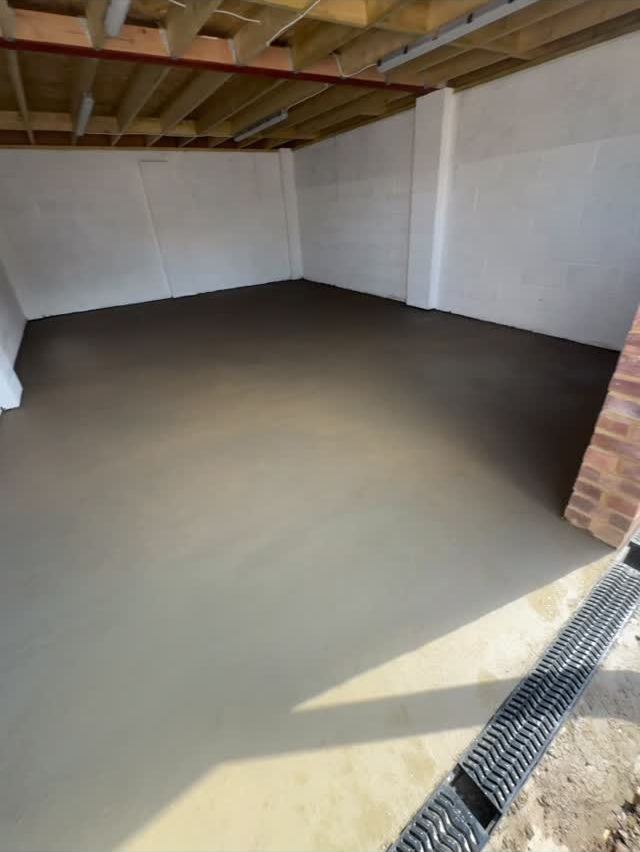
A tough, durable base for heavier use.
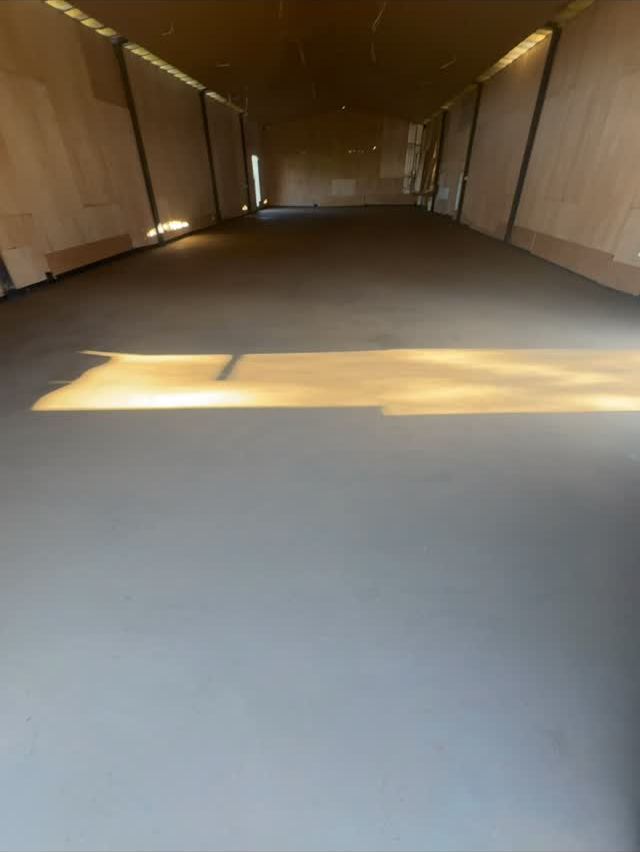
Fibre-reinforced screed for strength where traffic is heavy.
We check the base, levels and depth needed, and give you a fixed price.
We clean and prime the base for bonded screeds, or lay the membrane and insulation for unbonded and floating screeds.
The screed is mixed on site, spread, compacted and ruled off to your levels and falls.
The surface is trowelled smooth and left to cure, with clear guidance on drying before flooring goes down.
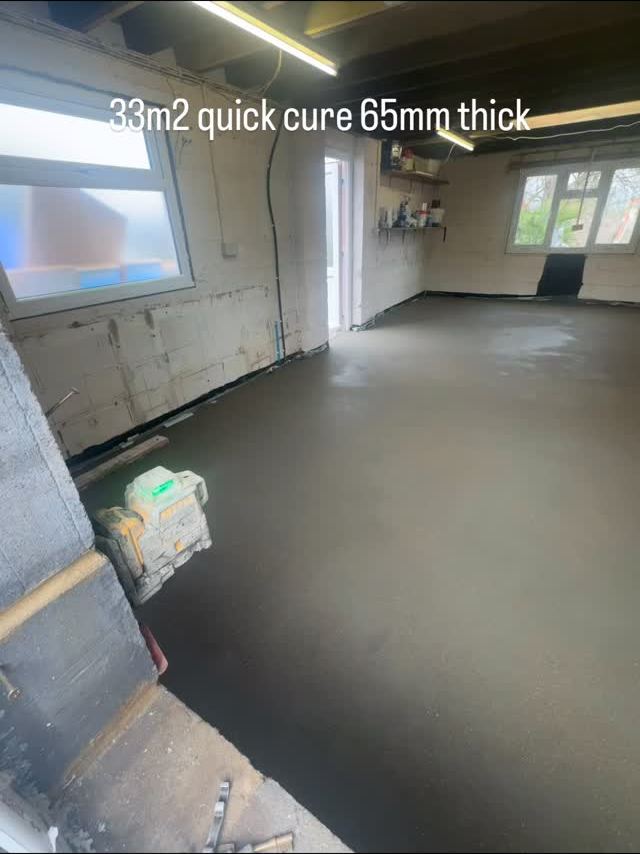
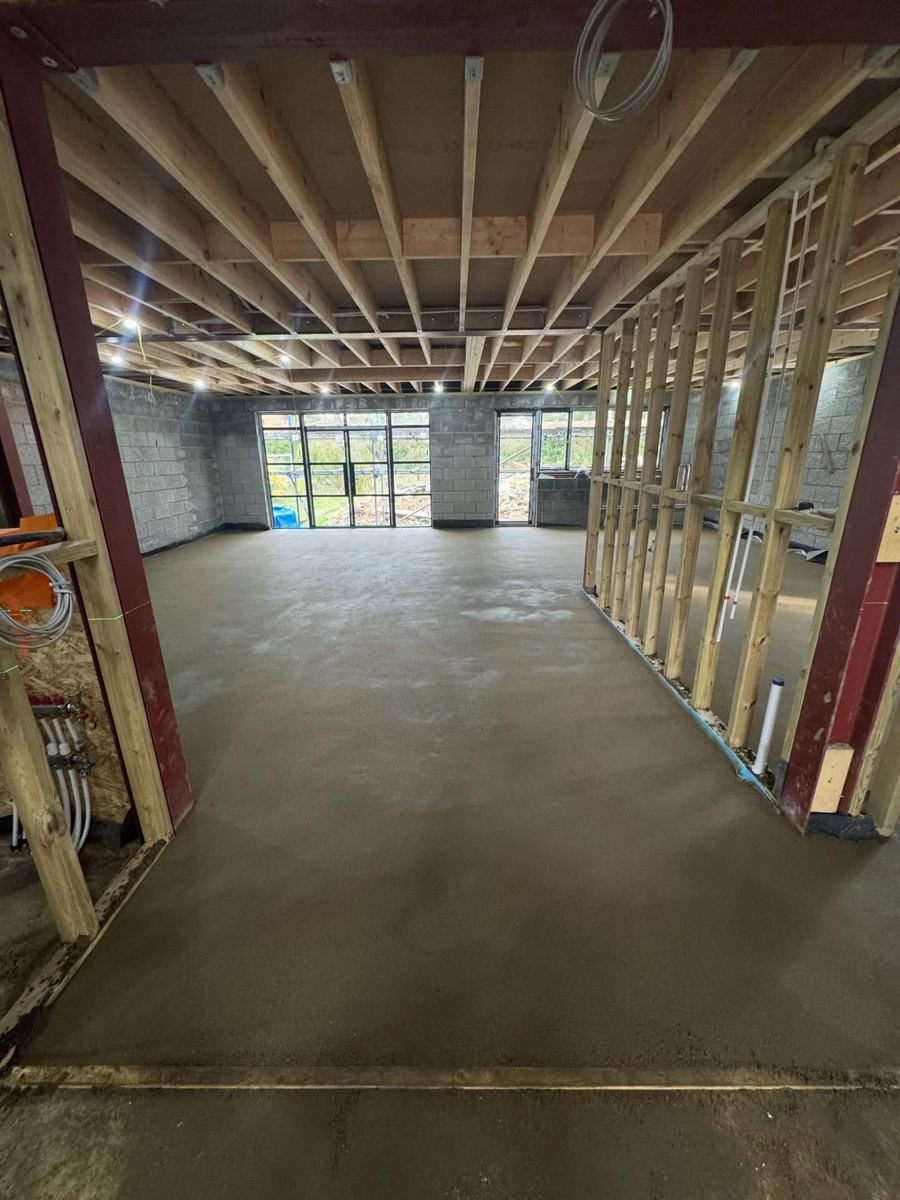
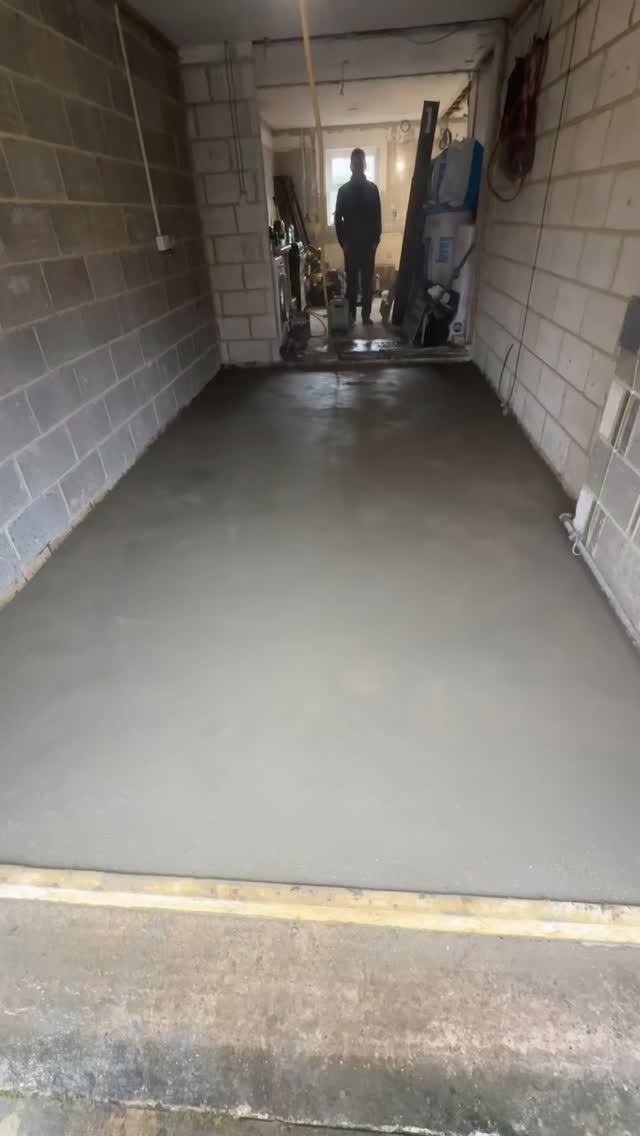
Sand and cement screed costs around £20 per m² supplied and laid, or around £27.50 per m² for fast-drying screed, based on a floor of about 150m² at 75mm. Price depends on depth, floor area, access and whether you need fibres. Small or awkward areas cost more per m², and there’s a minimum charge of £650.
Try our screed cost calculator for a guide price, or send us your floor area, depth and postcode for a fixed quote.
Get a fixed price“Great finish, came when they said they would, left the place clean and tidy, hard workers. Were in and out in just an hour or two. They gave the best quote too - definitely recommend Luke and his crew.”
“Great service from Luke and the team. Great communication with an exceptional finish. Spoke to 3 companies and couldn’t be happier with the choice we made. Thanks again.”
“Luke’s work is amazing! Not only is he fast but also incredibly communicative and very flexible with scheduling. We will definitely be working with him again!!”
“Luke done a fantastic job. So pleased with the result. Luke and his team are very professional and polite. No problems at all recommending these guys.”
It depends on the build-up: from 20mm bonded to concrete, 40mm on a membrane, and 50mm when floating over insulation. Over underfloor heating we leave 15–20mm above the pipes.
Roughly 1mm per day, so a 50mm floor needs around seven weeks before most floor finishes go down. Fast-drying screeds shorten this considerably.
Sand and cement screed with polypropylene fibres mixed in. The fibres add strength and help reduce shrinkage cracking.
When your programme is tight, for example a kitchen extension where flooring needs to go down within a couple of weeks.
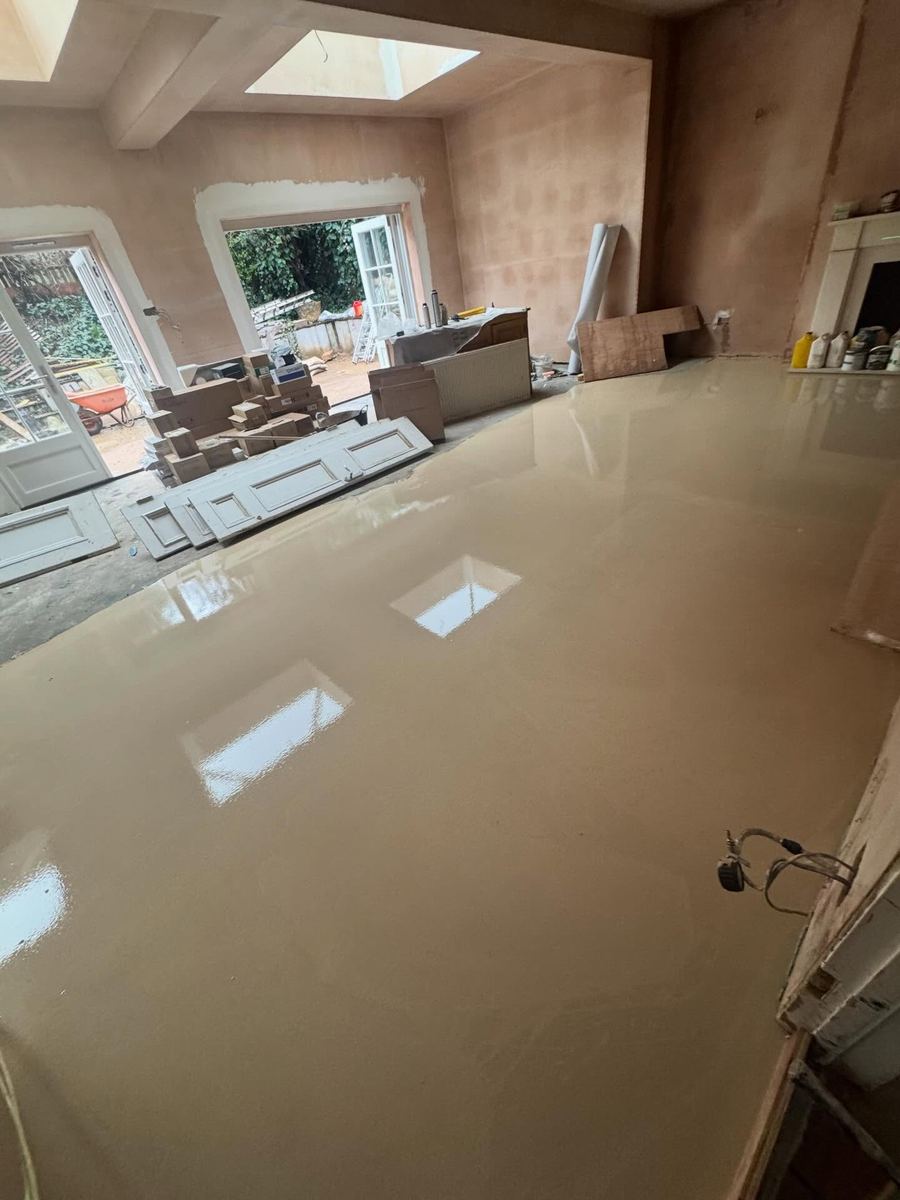
Fast, self-levelling flow screed that gives a flat finish over large areas and underfloor heating. Laid in a fraction of the time of traditional screed.
Learn more about liquid screed →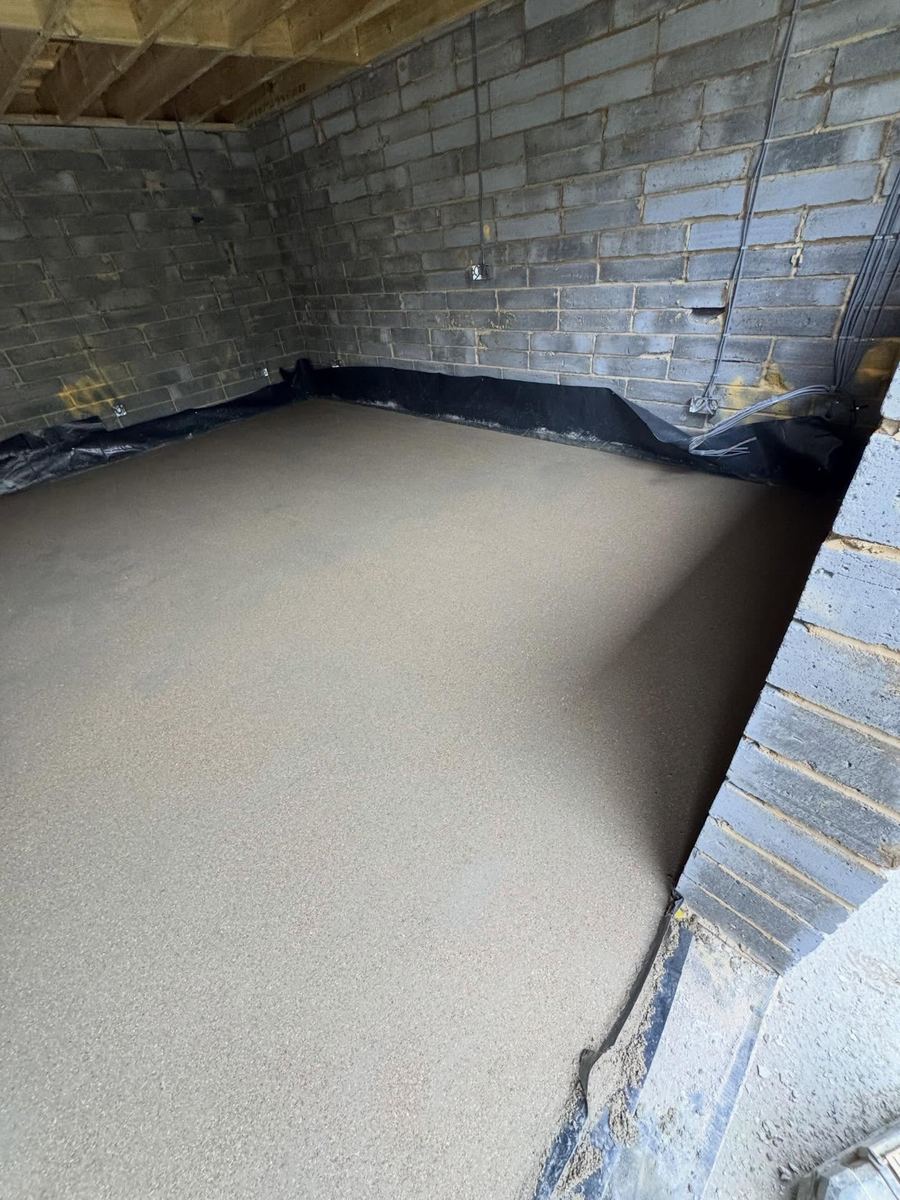
The right build-up for your base, whether bonded to concrete, laid on a membrane, or floated over insulation.
Learn more about bonded & floating screed →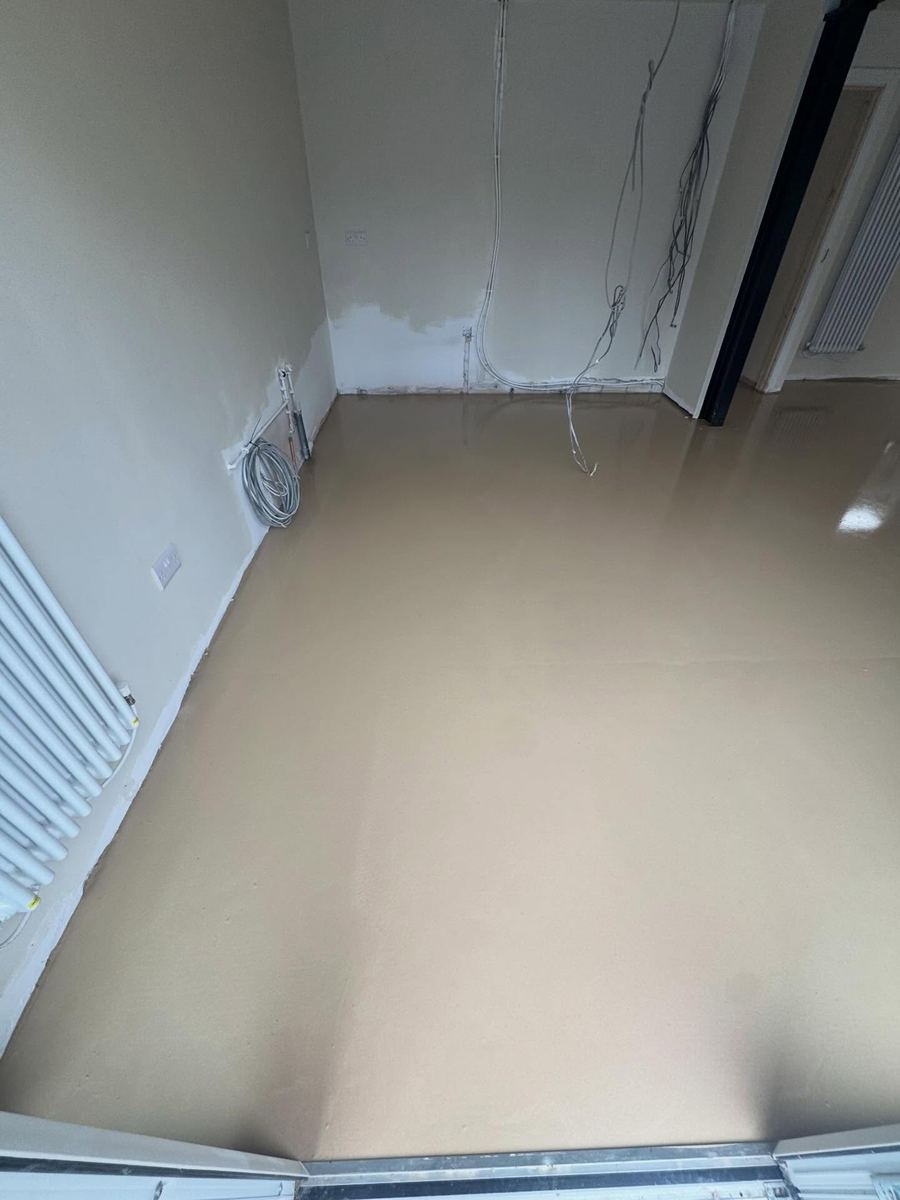
Screed laid to fully encase your heating pipes, for even warmth across the room and no cold spots.
Learn more about underfloor heating screed →Tell us your floor area, depth and postcode, and we’ll come back with a fixed price, usually within 24 hours.